

Cart
0
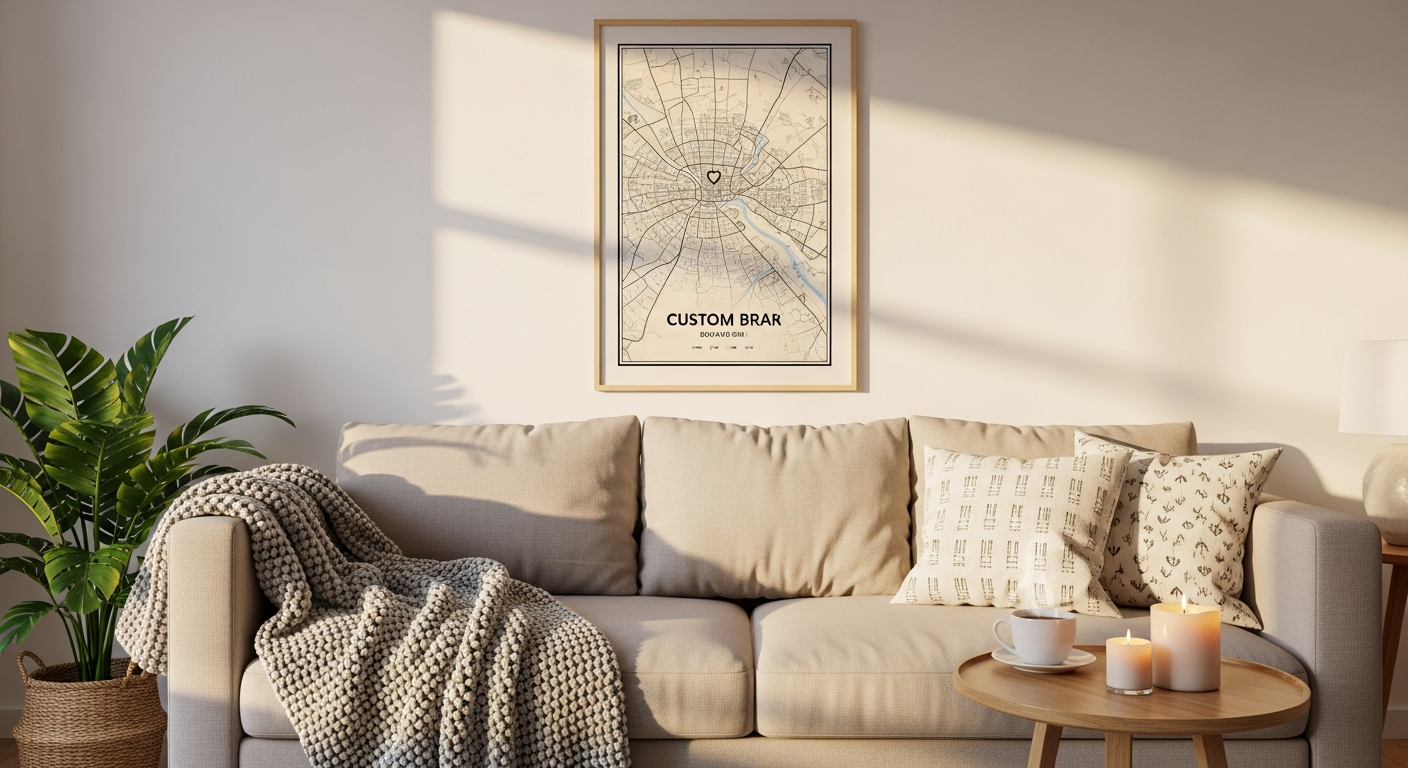
There are moments that change a life, and places that become their silent guardians. Do you remember the air temperature that day? The song playing in the background? The first glance exchanged? While the emotion often remains seared into our memories, precise geographical details tend to fade with the years. This is the paradox of romantic memory: we remember the intensity of the feeling, but we sometimes forget the street name or the exact building number.
Yet, this meeting place is the starting point of your shared history. It's the physical anchor of your destiny. Many couples today seek to materialize this memory, to move from the intangible to the tangible. But how do you do this when the memory is hazy? How do you find the exact GPS coordinates of a park, a festival, or a small street abroad? In this key article, we'll not only give you the technological and emotional tools to find this lost address, but also explain why and how to transform this geographical data into an eternal symbol of your love.
Why your meeting place is much more than just an address
In the psychology of couples and the construction of shared memories, the place of first meeting holds a central, almost sacred, place. It is not simply a point on a map; it is a temporal and spatial intersection where two life paths, previously parallel or diverging, collided and never to part again. Psychologists often speak of spatial anchoring. Our brains associate strong emotions with physical locations. Returning to this place, or simply visualizing it, reactivates the neural circuits of pleasure, discovery, and initial attachment.
However, in this digital age of speed, we tend to dematerialize our memories. They end up stored in the cloud, lost in endless conversation threads, or drowned in the mass of our photo galleries. Taking the time to search for the precise address is a conscious effort to preserve your love. It's saying to the other person, "This moment means so much that I want to know every detail, down to the exact latitude and longitude." It's a profoundly romantic gesture that stands in opposition to the ephemeral.
Furthermore, in interior design, the trend is towards "storytelling." Decorating is no longer about filling space, but about telling a story. Your home should reflect your identity. Displaying the details of how you met transforms your living room or bedroom into an intimate museum where every object holds profound meaning. It's an elegant, minimalist, and mysterious way to celebrate your union, far removed from the sometimes overly literal clichés of red hearts or classic wedding photos. It's a love geometry that speaks only to you, a secret code displayed for all to see.
The foolproof methods to find your GPS coordinates
Convinced of the importance of this place, but unsure of its exact location? Don't panic. Before creating your poster, here's how to conduct your investigation like a true love detective:
- Photo metadata (EXIF): If you took a photo that day (or during your first few dates at the same location), this is the most reliable method. On a smartphone (iPhone or Android), open the photo and swipe up to see the details. A map will often appear with the exact pin.
- Google Maps History (Timeline): If you had a smartphone with location services enabled at the time, Google may have recorded your movements. Check your trip history for the exact date of your meeting. It's often a forgotten goldmine.
- Conversation archives: Go back in time through your text messages, WhatsApp, or Messenger. Search for keywords like "where are we meeting?", "I'm here", or location sharing. The address is often hidden there.
- Field investigation (Street View): If you have a visual memory (a blue facade, a fountain), use Google Street View to virtually walk around the neighborhood until you find the precise point that triggers the thrill of recognition.
Once you've found this address or these GPS coordinates, you hold the source code of your relationship in your hands. Now all that's left is to enhance it. This is where the magic happens: you can use our intuitive tool to personalize your meeting map in just a few clicks. You enter the location, and the algorithm generates the precise street layout from that era.
Decorating tips for incorporating this map into your home:
- Strategic placement: Avoid dark hallways. Opt for a well-lit wall in the living room to spark conversation with your guests ("Where is that?"), or above the head of the bed for a more intimate and protective symbolism.
- Choosing the frame: For a black and white map, a thin black aluminum frame adds an industrial and modern touch. For a softer, Scandinavian look, opt for light oak. If your interior is classic, a thin gold frame can enhance the map's elegance.
- The temporal triptych: Why limit yourself to the meeting? Some couples create a series of three posters aligned together: "Where it all began" (Meeting), "Where we said 'I do'" (Wedding), and "Where we live" (Family home). This creates a visually stunning geographical timeline.
Emma's vision: When cartography becomes poetry
At "Where It All Began," we don't just sell paper and ink. We are artisans of memory. We know that the quality of the medium must match the emotion it carries. A pixelated poster or paper that is too thin would betray the nobility of the memory. That's why we have an almost obsessive approach to detail, because we know that this frame will be with you for decades, perhaps even passed down through generations.
“An address is much more than a point on a GPS; it’s the lock of a memory. Finding the exact place is like finding the key that unlocks the door to the day your world shifted towards the light.”
Emma, creator of Where It All Began
This philosophy is reflected in our 100% Made in France production process. We use a premium, thick, textured matte paper that absorbs light without unwanted reflections, allowing you to admire the topographical details from every angle. High-definition printing ensures that even the smallest alleyway, the one where you may have wandered hand in hand, is perfectly visible. It is this combination of the technological precision of cartography and the artistic sensitivity of layout that transforms your meeting place into a timeless work of art. By choosing to immortalize this place, you lay the foundation stone of your visual family heritage.
Finding the exact address of where you first met is a way to rekindle the flame of those early days. It's a silent pilgrimage back to that moment. Don't let that memory fade or remain trapped on a phone screen. Give it the place it deserves: at the heart of your home, carefully printed, lovingly framed. It's the ultimate gift for a couple's anniversary, Valentine's Day, or simply to say, "I haven't forgotten a thing."
Create my personalized card now
FAQ: 6 frequently asked questions about the meeting place and its physical manifestation
1. I only know the city, not the exact street. Is that a problem? Absolutely not. You can center the map on the city as a whole. The result will be more graphic and just as symbolic. The important thing is to evoke the place where your story began.
2. Can we find a meeting place in nature (forest, beach)? Yes! Our creation tool isn't limited to postal addresses. You can navigate the map and manually place the marker on a beach, a hiking trail, or even in the middle of the ocean if you met on a cruise.
3. Is it possible to add a date in addition to the location? Absolutely. Customization allows you to add text. The standard setup often includes: a catchy phrase (e.g., "Where it all began"), the name of the city/location, and the date of the meeting or GPS coordinates.
4. Why is this an ideal gift for a man? Men often appreciate gifts that combine aesthetics and technical aspects. The minimalist and precise "architectural plan" design, combined with the symbolism of the space, makes it a sentimental gift without being kitschy. It's a masculine decoration, full of meaning.
5. How can I ensure the GPS coordinates are correct? Our tool automatically generates the coordinates when you place the cursor. However, if you already have the precise coordinates (latitude/longitude) retrieved via Google Maps, you can often verify them or enter them in the customizable text fields for absolute accuracy.
6. What size should I choose for a small apartment? If space is limited, the 30x40cm size is ideal. It's large enough for the map details to be legible, but compact enough to fit into a gallery wall or simply sit on a shelf without drilling into the walls.

